
Kanso
Guided by the Japanese aesthetic principle of Kanso, meaning simplicity and clarity, this residence explores the discipline of reduction—removing the nonessential to reveal what is necessary, purposeful, and enduring. Rather than representing minimalism as a visual language, Kanso establishes a framework of order, restraint, and intentionality, allowing space, light, material, and use to define the architectural experience.
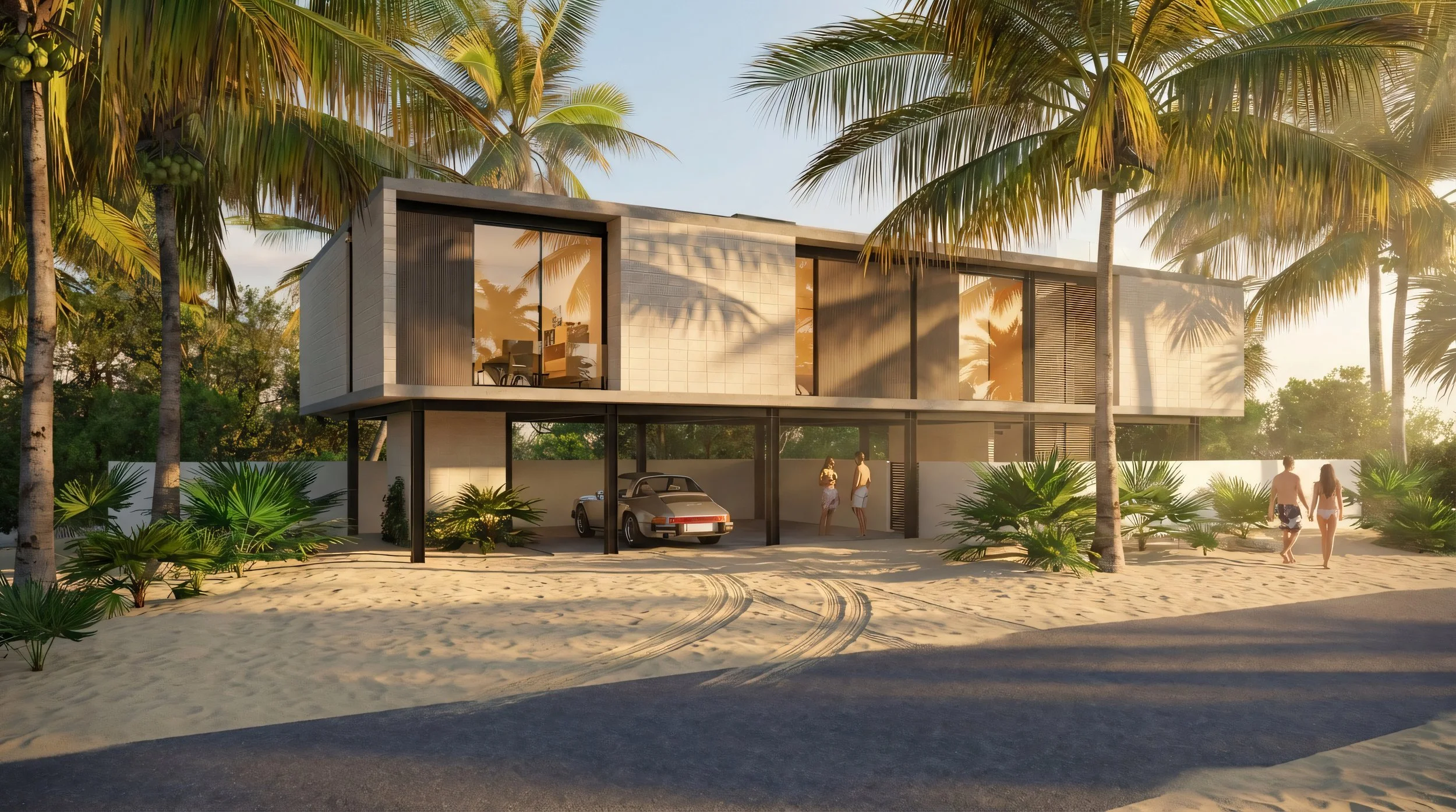
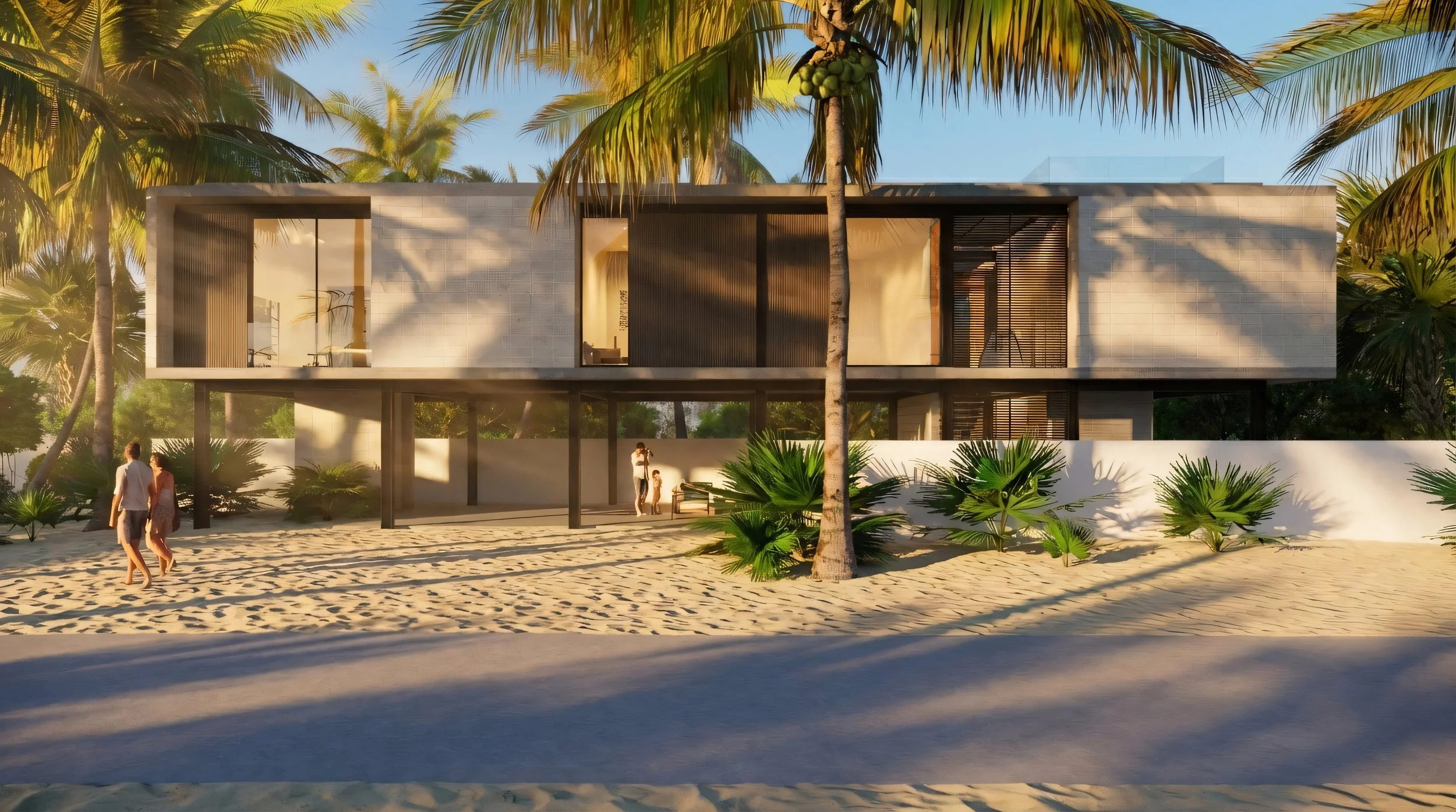
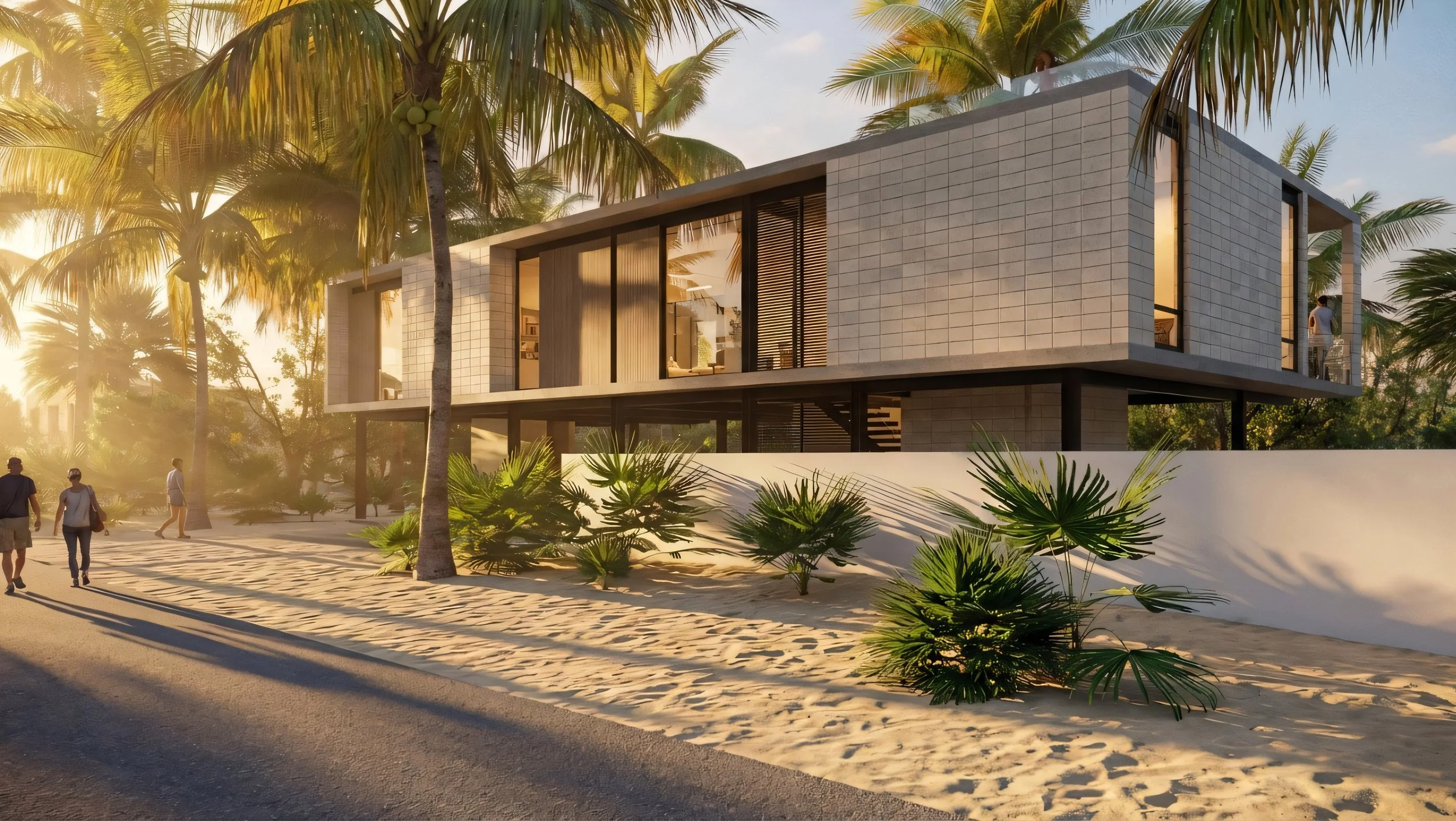
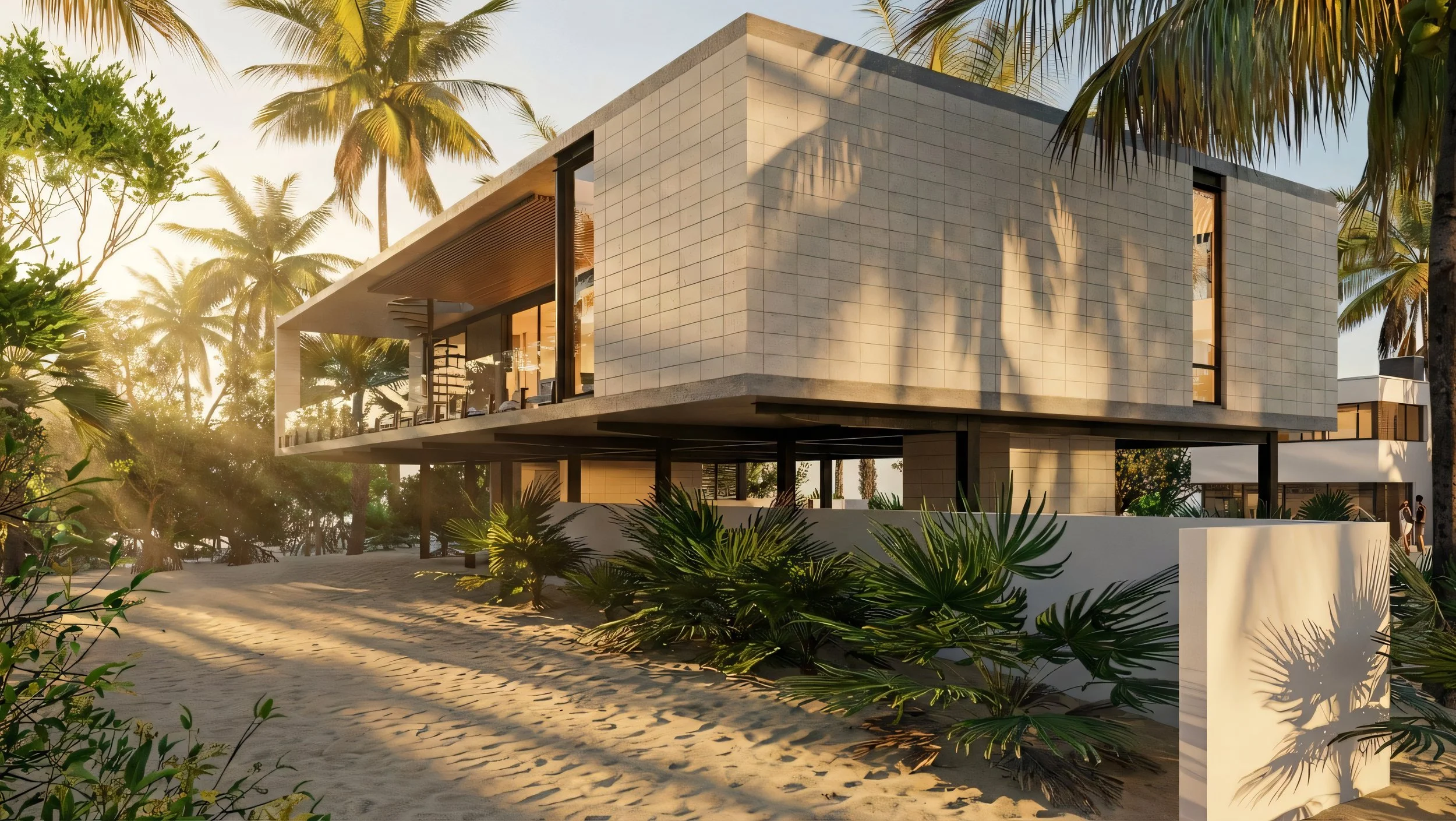
The design embodies this principle through a single elevated volume, restrained in form and precise in composition, set lightly within the coastal landscape. Elevating the living spaces responds functionally to the flood zone while reinforcing a conceptual separation between the essential functions of daily life and the natural terrain below. The house is conceived as a quiet horizontal presence, allowing light, air, and movement to flow beneath and around the structure while minimizing its physical and visual impact.
The organization of the residence is driven by clarity of use and efficient use of space. A limited palette of durable, weather-responsive materials reinforces the architecture’s direct expression, in which structure, proportion, and the interplay of light and shadow become the primary elements of articulation. Complexity is replaced by precision, and ornament is replaced by the inherent qualities of material and construction.
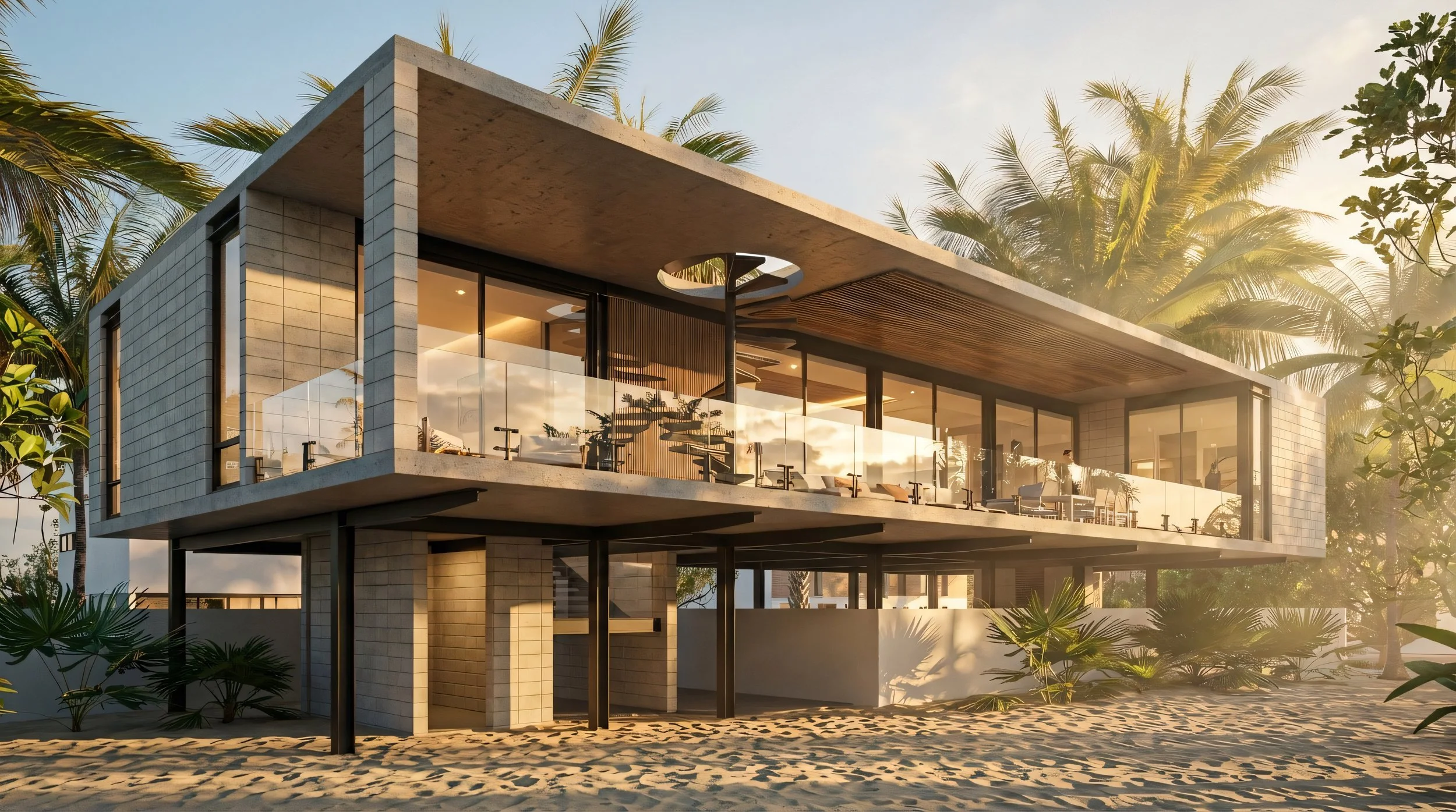
Exterior spaces are similarly defined by purpose and hierarchy. The main living level extends toward a generous northwest-facing terrace overlooking Joan M. Durante Community Park, creating a seamless transition between interior and exterior living. Designed for gathering, dining, and everyday use, the terrace captures natural light and prevailing breezes while providing a protected outdoor environment. Above, a compact spiral stair leads to a roof terrace that offers a distinct experience—an open platform for sunset views and informal gatherings, set apart from the primary living spaces to maintain clarity and simplicity.
The residence’s vertical sequence—from the shaded ground plane, to the elevated living terrace, to the open roof deck—reflects the principles of Kanso: order, sufficiency, and intentionality. Each element serves a clear purpose, and no space is without meaning. The result is a modern coastal retreat shaped by climate, material honesty, and restraint—an architecture that finds richness not in excess but in clarity.
Location:
Longboat Key, Florida
Status:
Completion, 2028